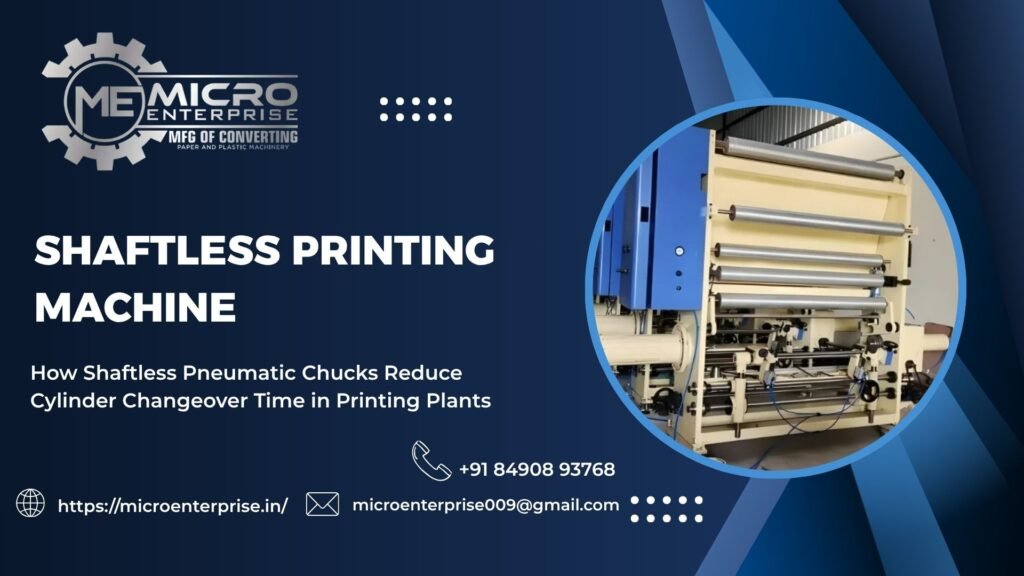
How Shaftless Pneumatic Chucks Reduce Cylinder Changeover Time in Printing Plants
In fast-paced packaging converting, commercial graphic printing, short-run flexible pouch production, and high-volume label manufacturing, overall equipment effectiveness hinges on minimizing press setup times. Traditional shafted printing presses require press operators to insert heavy solid steel mandrels through the center of every printing cylinder, lock mechanical keys, manually lift the heavy assemblies onto press frames, and align bearing blocks for every job change.
Streamlining job changeover workflows and eliminating heavy manual shaft handling depends fundamentally on the ergonomic architecture of an advanced Shaftless Printing Machine.
An industrial shaftless printing press incorporates heavy-duty sliding side frames, high-pressure pneumatic or hydraulic cone chucks, independent servo-driven cylinder motors, precision doctor blade holders, and automated cylinder trolley systems designed for rapid cylinder loading and unloading.
Operating conventional shafted printing presses during frequent design changeovers leads to long machine downtime, high operator injury risks, dropped cylinder damage, mechanical keyway wear, concentricity run-out, and reduced plant profitability. Understanding the core theoretical mechanics governing shaftless cone chuck engagement, axial clamping force transmission, rotational run-out suppression, and independent servo synchronization enables printing engineers to optimize changeover efficiency. This comprehensive technical guide provides an in-depth theoretical analysis of how shaftless pneumatic chucks reduce cylinder changeover time in printing plants.
Theoretical Kinetics of Shaftless Chucking and Axial Clamping Mechanics
Shaftless printing architecture replaces continuous central mandrels with side-mounted pneumatic expansion cones that grip cylinder journals directly:
+-----------------------------------------------------------------+
|                   CYLINDER TROLLEY ALIGNMENT IN PRESS           |
| (Engraved cylinder sits on trolley between open printing frames) |
+-----------------------------------------------------------------+
                                  |
                                  v
+-----------------------------------------------------------------+
|             PNEUMATIC / HYDRAULIC AXIAL CONE ENGAGEMENT         |
| (Sliding chucking heads advance, inserting cones into cylinder) |
+-----------------------------------------------------------------+
                                  |
                                  v
+-----------------------------------------------------------------+
|             HIGH-RIGIDITY DIRECT DRIVE & CONCENTRIC ROTATION     |
| (Pneumatic pressure locks cylinder; direct servo drives rotation)|
+-----------------------------------------------------------------+
1. Direct Cone Chuck Engagement and Axial Force Vectoring
Theoretical Principle: Shaftless systems utilize motorized or pneumatic chucking heads mounted directly to opposing press side-frames. Precision tapered steel cones extend horizontally into both hollow ends of the printing cylinder bore.
Axial Clamping Rigidity: High pneumatic or hydraulic clamping pressure forces the tapered cones into the cylinder core walls. This axial force vector wedges the cylinder securely into position, establishing a rigid, slip-free mechanical connection that transmits high drive torque without needing an internal mandrel.
2. Rotational Concentricity and Run-Out Suppression Mechanics
Theoretical Principle: Inserting a separate steel mandrel through a cylinder core introduces mechanical clearances that can cause minor concentricity errors (run-out). In contrast, self-centering tapered shaftless chucks force the cylinder bore into perfect alignment with the drive spindle axis.
Vibration and Defect Elimination: Maintaining exact rotational concentricity suppresses mechanical chatter and cylinder bouncing at high press speeds. This structural stability ensures uniform doctor blade contact and consistent ink film thickness across the web.
Comprehensive Analysis of Shaftless Design Advantages
Deploying a shaftless printing machine delivers distinct operational, safety, and economic benefits for modern printing operations:
Drastic Reduction in Job Setup and Changeover Time: Eliminating the need to insert, lock, extract, and clean heavy steel shafts cuts cylinder changeover cycles from hours to minutes per press run.
Elimination of Heavy Manual Shaft Lifting Hazards: Press operators no longer lift heavy solid steel shafts, eliminating back injuries, operator fatigue, and accidental cylinder drop damage.
Independent Servo Drive Precision and Zero Backlash: Shaftless presses connect dedicated direct-drive AC servo motors to each printing unit chuck assembly, eliminating mechanical line-shaft gears, gear wear, and rotational backlash.
Versatility for Varying Cylinder Face Widths: Motorized sliding side-frames adjust their axial distance automatically, allowing the press to accommodate various cylinder widths without requiring different shaft lengths.
System Integration Across Printing Machinery Infrastructure
Shaftless printing machinery operates as a high-efficiency graphic application station within complete converting plants:
Fast Cylinder Changeover Technology: High-speed printing and rapid shaftless cylinder loading are executed on an advanced Shaftless Printing Machine.
High-Definition Gravure Printing: Direct cylinder image transfer and multi-color registration control are managed on a Rotogravure Printing Machine.
Paper Substrate Printing: Specialized paper drying tunnel management and low-stretch web tension control are handled on a Paper Rotogravure Printing Machine.
Decorative Metallic Foil Stamping: High-precision hot and cold foil transfer onto flexible packaging webs is performed on a Foil Printing Machine.
Flexographic Anilox Printing: Precise fluid ink metering using structured ceramic anilox rolls is executed on a Flexo Printing Machine.
Theoretical Best Practices for Shaftless Press Operation
To ensure maximum shaftless chucking reliability, preserve cone geometry, and maintain high printing productivity, printing engineers follow three core theoretical guidelines:
Verify Pneumatic Pressure Interlocks Before Operation: Ensure safety pressure switches confirm full pneumatic chucking pressure before allowing the press to accelerate to high operating speeds.
Maintain Clean and Lubricated Tapered Chuck Cones: Inspect and clean tapered pneumatic chuck cones regularly to remove ink, dust, and metal shavings that disrupt cylinder self-centering.
Utilize Ergonomic Hydraulic Cylinder Trolleys: Pair shaftless presses with height-adjustable hydraulic trolleys to present incoming cylinders at the exact chuck centerline, enabling effortless loading.
Conclusion
Understanding the theoretical mechanics of shaftless cone chucking engagement, axial force vectoring, self-centering rotational concentricity, and direct servo-drive synchronization is essential for optimizing changeover efficiency in printing plants. By eliminating manual shaft handling, deploying pneumatic chucking heads, utilizing independent servo drives, and ensuring exact cylinder alignment, printing facilities minimize press downtime, protect operator safety, and maximize productivity.
Looking for High-Speed Shaftless Printing and Converting Machinery? Explore our complete range of ergonomic Shaftless Printing Machine models, high-definition Rotogravure Printing Machine units, specialized Paper Rotogravure Printing Machine systems, precision Foil Printing Machine setups, and versatile Flexo Printing Machine setups at Micro Enterprise. Contact our expert engineering team today.
 Users Today : 11
 Users This Month : 301
 Total Users : 3424